| News Article Tape: |
| Blog Entry Tape: |
Tuesday, May 31, 2011

May 31st forum announcement
Dear Poetry Aficionados,
Poetry & Poets in Rags blog
This week, let me tell you about two links from each of our three sections in Poetry & Poets in Rags. Let's begin in the last section, Poetic Obituaries, where a huge story broke, Gil Scott-Heron has died. The obituary links are listed in alphabetical order by last name of deceased. They begin with Canadian World International Poetry Slam Champion Willie Lee Bell a.k.a. Will Da Real One, being shot down outside his poetry club in Miami.
 The first of the two I will select out of our Great Regulars section is a translation of the poem, I, Lalla, written by the 14th-century poet Lalla. The poem appears in The Caravan. We have two kinds of Great Regulars. The first is the journalists and poets who write these great articles, and bring us great poems. The second kind is the periodicals that bring us great articles and poems. Great Regulars are in order first by the last name of the Great Regular person, who are all followed by the periodicals listed in alphabetical order. So people first, then zines. This week, Frank Wilson happens to be the last person in this section, and The Caravan the first periodical. So it is there you will find I, Lalla. The second of the two is from Great Regular Michael Rosen, UK's former Children's Poet Laureate. He's written an essay that I recommend called: Shakespeare: the metaphorical terrorist.
 Our first section is News at Eleven, wherein you will find eleven news stories. Our first this week, our headliner, is about the near extinction of the nightingale, and The Nightingale Appeal. The second item in News at Eleven that I will highlight, I do so, because it makes for a nice companion article to Michael Rosen's mentioned above. It comes from Tablet Magazine, and is called "Politics and Poetry." Both Rosen's article and this one relate Shakespeare to politics in insightful ways.
Thanks for clicking in.
Yours,
Rus
Our links:
IBPC: Poetry & Poets in Rags
Poetry & Poets in Rags blog
IBPC Home
~~~~~~~~~~~
Poetry & Poets in Rags blog
This week, let me tell you about two links from each of our three sections in Poetry & Poets in Rags. Let's begin in the last section, Poetic Obituaries, where a huge story broke, Gil Scott-Heron has died. The obituary links are listed in alphabetical order by last name of deceased. They begin with Canadian World International Poetry Slam Champion Willie Lee Bell a.k.a. Will Da Real One, being shot down outside his poetry club in Miami.
The first of the two I will select out of our Great Regulars section is a translation of the poem, I, Lalla, written by the 14th-century poet Lalla. The poem appears in The Caravan. We have two kinds of Great Regulars. The first is the journalists and poets who write these great articles, and bring us great poems. The second kind is the periodicals that bring us great articles and poems. Great Regulars are in order first by the last name of the Great Regular person, who are all followed by the periodicals listed in alphabetical order. So people first, then zines. This week, Frank Wilson happens to be the last person in this section, and The Caravan the first periodical. So it is there you will find I, Lalla. The second of the two is from Great Regular Michael Rosen, UK's former Children's Poet Laureate. He's written an essay that I recommend called: Shakespeare: the metaphorical terrorist. Our first section is News at Eleven, wherein you will find eleven news stories. Our first this week, our headliner, is about the near extinction of the nightingale, and The Nightingale Appeal. The second item in News at Eleven that I will highlight, I do so, because it makes for a nice companion article to Michael Rosen's mentioned above. It comes from Tablet Magazine, and is called "Politics and Poetry." Both Rosen's article and this one relate Shakespeare to politics in insightful ways.
Thanks for clicking in.
Yours,
Rus
Our links:
IBPC: Poetry & Poets in Rags
Poetry & Poets in Rags blog
IBPC Home
~~~~~~~~~~~
News at Eleven: Populations of the bird, which has been
an inspiration for generations of poets and romantics, have crashed by more than 90 per cent in the last 40 years.
According to a study by the British Trust for Ornithology (BTO), the species is on course to vanish completely from the UK.
The findings mean the bird will be upgraded to "red status"--signifying the highest possible degree of conservation concern.
from Telegraph: Nightingale heading to extinction
then British Trust for Ornithology: The Nightingale Appeal
~~~~~~~~~~~
According to a study by the British Trust for Ornithology (BTO), the species is on course to vanish completely from the UK.
The findings mean the bird will be upgraded to "red status"--signifying the highest possible degree of conservation concern.
from Telegraph: Nightingale heading to extinction
then British Trust for Ornithology: The Nightingale Appeal
~~~~~~~~~~~
News at Eleven: Robin Fulton, his [Tomas Tranströmer's] translator for 35 years,
 suggests that, because of their inner consistency, readers should put aside chronology and explore Tranströmer's poems at will, guided by subject or mood. I recommend starting with the long mid-career poem Baltics (1974), its title's plural suggesting our multiple subjective interpretations of sea and landscape.
 But we cannot forget the march of time when we reach The Great Enigma (2004), gnomic short poems plus 45 dazzlingly strange and beautiful haiku. Tranströmer, 80 this year, writes "The funerals keep coming/more and more of them/like the traffic signs/as we approach a city."
from The Independent: New Collected Poems, By Tomas Tranströmer, trans. Robin Fulton
~~~~~~~~~~~
News at Eleven: Kenko is charming, off-kilter, never gloomy.
 He is almost too intelligent to be gloomy, or in any case, too much a Buddhist. He writes in one of the essays: "A certain man once said, 'Surely nothing is so delightful as the moon,' but another man rejoined, 'The dew moves me even more.' How amusing that they should have argued the point."
He cherished the precarious: "The most precious thing in life is its uncertainty." He proposed a civilized aesthetic: "Leaving something incomplete makes it interesting and gives one the feeling that there is room for growth." Perfection is banal. Better asymmetry and irregularity.
from Smithsonian: The Timeless Wisdom of Kenko
~~~~~~~~~~~
News at Eleven: The remembered scene, the doomed affair,
 the thickening of time inside the poem and sense of it flicking past outside: these are all things [Bernard] Spencer learned from [Louis] MacNeice, but he learned them by heart, and wields them on his own. The "salaams" show distinct realms of experience infusing and enlivening one another, as life in Turkey is brought fruitfully to bear on the English country house.
from The Guardian: Complete Poetry, Translations and Selected Prose by Bernard Spencer--review
~~~~~~~~~~~
News at Eleven: Traditionalists argued that Shylock
 could not have been Jewish, because revenge was not a Jewish practice. The socialists argued that Shylock was a warning to the creeping spirit of speculation and profiteering starting to rear its head in the burgeoning state. In other words, Shylock was the wrong kind of Jew, not a Jew, or the ultimately wronged Jew all at the same time. The Merchant of Venice has been performed throughout Israel's history--after the founding of the state, after the conquests of 1967, after the beginnings of the intifada. In each case, it has provoked massive outcry and defense.
from Tablet: Politics and Poetry
~~~~~~~~~~~
News at Eleven: Ultimately, [Harold] Bloom believes,
 all of the greatest literary art is networked together: "If you carry the major British and American poets around with you by internalization," he explains, "after some years their complex relations to one another begin to form enigmatic patterns." Those patterns of influence keep looping back to the greatest writers, like Homer, Shakespeare, Dante, and Tolstoy. Literary influence, Bloom says, is like a "labyrinth" built up from moments of genuine inspiration, when great literary minds encounter one another.
from The Boston Globe: Harold Bloom on the Canon and Creativity
~~~~~~~~~~~
News at Eleven: But once I'm up there at the podium
 I still enjoy reading and contact with an audience, and yes, I do believe public recitation can aid an audience's appreciation.
Ever since I read T.S. Eliot's words about the "auditory imagination" I've had a theoretical basis for that belief. Eliot called it a "feeling for syllable and rhythm, penetrating far below the conscious levels of thought and feeling . . . (fusing) the most ancient and the most civilized mentality." The main thing is to be led by that feeling for syllable and rhythm so that the audience can hear the poem more or less as a score, and daydream in sympathy with it.
[--Seamus Heaney]
from Toronto Star: Seamus Heaney: Griffin Poetry Prize finalist
~~~~~~~~~~~
News at Eleven: Maybe it's something about being a journalist,
 that you innately know what a big story is, and you almost physically cringe if it's not told. It's like watching someone draw a flush at poker and fold instead of bet; an offence against the basic order of life's odds. In news value terms, spies and assorted secret-holders are aces--people who know that the world is ordered in a different way to that which is ordinarily supposed. In [John] Burnside's schema, that's probably what poets are.
from The Scotsman: Interview: John Burnside, author
~~~~~~~~~~~
News at Eleven: Unveiled by Keats House poet in residence
 Benjamin Zepahaniah on May 27, it is now on display in the Brawne Room, where Fanny would have almost certainly read it in 1820. Poignantly, the letter sits next her engagement ring, given to her by Keats in 1820, and which she wore for the rest of her life.
Wesley Kerr, Chairman of the London Region Heritage Lottery Fund, which helped to purchase the letter said its acquisition would enable countless generations to "see close up the powerful words penned by Keats at the evocative, superbly restored villa where he wrote them."
from Culture 24: Keats House acquires poignant love letter Keats wrote to girl-next-door Fanny Brawne
~~~~~~~~~~~
News at Eleven: From Afghanistan to Zimbabwe, poets
 from the 205 Olympic nations are competing to be part of the UK's largest ever poetry festival next year.
Led by the Southbank Centre's artist in residence, Simon Armitage, and artistic director Jude Kelly, Poetry Parnassus will be part of next year's Cultural Olympiad. It will see 205 poets--one from each of the 205 Olympic nations--taking part in readings, workshops and a gala event, touring the UK and contributing a poem in their own language for a poetry collection, The World Record, which will champion poetry in translation.
from The Guardian: UK's largest ever poetry festival planned for Olympics
~~~~~~~~~~~
News at Eleven (Back Page): But [Dave] Wofford and [Ann Marie] Kennedy
 chose to use the finely pulped, unmodulated pink paper instead. Its homogeneity is too subtle to be provocative on its own. Only after reading the colophon at the end of the book, which describes the process, would a reader know what he or she had been holding. Wofford expressed excitement in anticipating this moment of delayed encounter, as well as a desire to keep the paper from distracting a reader from [Kathryn Stripling] Byer's poems. Still, a reader could feel hoodwinked into handling an artifact that they might not otherwise have chosen to touch, an ambivalence voiced by an audience member in the open talk portion of the program.
from Independent Weekly: Pulping Dixie: Poet Kay Byer and the complexity of race in the South
then Side Spur Ramblings: New fine press book edition: Southern Fictions by Kathryn Stripling Byer
~~~~~~~~~~~
Great Regulars: When the internet arrived,
 our laws became meaningless and porn of every conceivable variety became freely available toieverybody. The information tsunami sweeps away all local qualms.
But, now, Sarkozy has flung Euro-statism in the face of the wired world. The implicit threat--of state censorship or control of the internet--is, to the aristocrats of Silicon Valley, unthinkable. But it is exactly what the music industry has pressed for in its demand that Internet Service Providers (ISPs) be made responsible for preventing their customers accessing illegally downloading music. The equivalent response to the tweeted subversion of superinjunctions would be the banning of Twitter use in Britain. Unthinkable, perhaps, but is it as unthinkable as an anarchic use of freedom of e-speech to trample all other freedoms?
from Bryan Appleyard: from The Sunday Times: Giggs and Twitter
~~~~~~~~~~~
"I don't use metaphors," he [Adam Curtis] says, "I do the opposite. I spend a lot of time watching footage and anything I spot that has an emotional resonance for me I note down or copy. I assume I'm quite normal emotionally so people will get it.
"Finding clips is like shopping. You should always buy the thing you like and never try to persuade yourself to buy something else."
His films consist of interviews, a narrative--delivered by Curtis in a mildly incredulous tone-- and a strange and beautifully edited collage of seemingly random but often devastatingly effective clips that accompany rather than fight the storytelling.
from Bryan Appleyard: from The Sunday Times: On Adam Curtis
~~~~~~~~~~~
Poorly educated--he skipped school to ride and race horses--Vic [Armstrong], nevertheless, has learned a lot. He tells me movingly--and revealingly--what stunting is really all about.
"It's more difficult than acting because what we do basically is tell a huge chunk of a story without dialogue or anything. Invariably you are telling a story just in mime. It's like the silent movies."
Like the best circus show, stunting does what poetry does--lifts your heart with wonder and gratitude.
from Bryan Appleyard: from The Sunday Times: Vic Armstrong the Stunt Guy
~~~~~~~~~~~
Great Regulars: Hare begins by asking if
 the young folk "still go to Siever's/For cider, after school, in late September?" He continues with his second question, asking if they still "gather hazel nuts among the thickets" on the farm owned by Aaron Hatfield "when the frost begins."
Hare's purpose in questioning seems quite innocent, as if he is merely curious about the continuation of life as he had seen it. And his questions and comments simply paint a portrait of simple, pastoral life including farms, hills, trees, cold weather, and "quiet water."
from Linda Sue Grimes: Suite101.com: Edgar Lee Masters' Zenas Witt
~~~~~~~~~~~
Great Regulars: Air
 by Ruth Stone
Through the open window, a confusion
from Garrison Keillor: The Writer's Almanac: Air by Ruth Stone
~~~~~~~~~~~
The Execution
by Alden Nowlan
On the night of the execution
from Garrison Keillor: The Writer's Almanac: The Execution by Alden Nowlan
~~~~~~~~~~~
First Early Mornings Together
by Robert Pinsky
Waking up over the candy store together
from Garrison Keillor: The Writer's Almanac: First Early Mornings Together by Robert Pinsky
~~~~~~~~~~~
I have no Life but this
by Emily Dickinson
I have no Life but this--
from Garrison Keillor: The Writer's Almanac: I have no Life but this by Emily Dickinson
~~~~~~~~~~~
I Knew a Woman
by Theodore Roethke
I knew a woman, lovely in her bones,
from Garrison Keillor: The Writer's Almanac: I Knew a Woman by Theodore Roethke
~~~~~~~~~~~
Smoke Break Behind the Treatment Center
by Debra Nystrom
End of the third week: family weekend.
from Garrison Keillor: The Writer's Almanac: Smoke Break Behind the Treatment Center by Debra Nystrom
~~~~~~~~~~~
Vigil Strange I Kept on the Field One Night
by Walt Whitman
Vigil strange I kept on the field one night;
from Garrison Keillor: The Writer's Almanac: Vigil Strange I Kept on the Field One Night by Walt Whitman
~~~~~~~~~~~
Great Regulars: Joe Paddock is a Minnesota poet
 and he and I are, as we say in the Midwest, "of an age." Here is a fine poem about arriving at a stage when there can be great joy in accepting life as it comes to us.
One's Ship Comes In
from Ted Kooser: American Life in Poetry: Column 323
~~~~~~~~~~~
Great Regulars: Elizabeth Barrett Browning's poem opens
 with a question, "What was he doing, the great god Pan/Down in the reeds in the river?" She seems to be teasing or taunting us, as if her work contained a symbolic meaning beyond its descriptive beauty. But what could this be?
The "great god Pan" enters the poem in rambunctious style. He is "spreading ruin and scattering ban," creating destruction and hurling curses at the heart of life. He breaks the "golden lilies," as if gleefully smashing apart the stagnancy of perfection.
Who is Pan?
from Christopher Nield: The Epoch Times: The Antidote--Classic Poetry for Modern Life: A Reading from 'A Musical Instrument'
~~~~~~~~~~~
Great Regulars: We now know that Wordsworth's idea
 of a writer being detached from the world, wrapped up in thoughts about nature and the imagination, was indeed ideological--as he warned us:
"The world is too much with us; late and soon,
Getting and spending, we lay waste our powers.
Little we see in Nature that is ours."
So, straight away, our US allies can label early Wordsworth an anti-bourgeois subversive--someone who will need to be watched.
from Michael Rosen: The Guardian: Shakespeare: the metaphorical terrorist
~~~~~~~~~~~
Great Regulars: The 13th-century round known as
 the Reading Rota or, more informally, The Cuckoo Song, isn't about the approach of summer, but its arrival. "Sumer is icumen in" is frequently mistranslated, but "icumen" means it has come, as the presence of the cuckoo implies, and it's here, nu (now). Summer, that is. If this thought is nu to you, if your bank holiday skies are grey, and cold raindrops falling down your neck, you might not be in the mood for such a loud, sweet, jolly Poem of the Week. On the other hand, The Cuckoo Song could cheer you up. Especially if you can find a group of people to sing it with you--in a gorgeous West Country accent.
from Carol Rumens: The Guardian: Books blog: Poem of the week: The Cuckoo Song
~~~~~~~~~~~
Great Regulars: This week's pairing: the poem
 "Peace Lilies" and a column from Jan. 1, "Art Intended to Make the End of Life Beautiful."
from Katherine Schulten: The New York Times: Poetry Pairing: May 26, 2011
~~~~~~~~~~~
Great Regulars: To utter such a prayer would entail
 an unusual leap of faith, in fact. For this is to say thank you come what may. And to utter that, it seems to me, is almost to tempt fate. At least for an ordinary mortal like myself.
So Eckhart's formula is one of those things that looks great at first glance, but upon closer examination reveals itself as not only not as easy as it sounds, but also quite possibly perilous.
from Frank Wilson: When Falls the Coliseum: That's What He Said: Saying "thank you" not as easy as it sounds
~~~~~~~~~~~
Great Regulars: This summer, we bring you a special
 treat: the ancient words of two powerful mystic Indian poets translated by contemporary Indian writers. The striking vākhs of 14th-century Kashmiri poet Lal Dĕd or Lalla are given to us by Ranjit Hoskote, and the songs of far-seeing 15th-century bhakti poet-saint Kabir by Arvind Krishna Mehrotra, in this double feature.
I, Lalla
from The Caravan: Poetry: I, Lalla/Songs of Kabir
~~~~~~~~~~~
Great Regulars: [by Paul Martin]
My Mother the Dancer
Louie Prima, Fats Domino, Rosemary Clooney, she piled
from The Christian Science Monitor: My Mother the Dancer
~~~~~~~~~~~
Louie Prima, Fats Domino, Rosemary Clooney, she piled
from The Christian Science Monitor: My Mother the Dancer
~~~~~~~~~~~
Great Regulars: Dog Tags
 by Preston Hood
At Graves Registry
from CounterPunch: Poets' Basement: Four by Preston Hood
~~~~~~~~~~~
Great Regulars: This week we're pleased to feature
 a poem by Susan Comninos, "Rome Visits When I'm in the Bath." The poem is a bit of a maze. On the surface there's the juxtaposition of Jewish and Christian identities, but then more layers begin to emerge. Do the two identities refer to different modes of inspiration, to routes through which the free-associative mind travels?
from Forward: The Arty Semite: Getting Out of the Roman Bath: Poetry by Susan Comninos
~~~~~~~~~~~

Great Regulars: Deborah Landau is the author of
 "Orchidelirium," which won the Anhinga Prize for Poetry, and "The Last Usable Hour" (2011, Copper Canyon Press). She co-hosts the video interview program, "Open Book," on Slate.com and is the director of the NYU Creative Writing Program.
from PBS: Newshour: Weekly Poem: Deborah Landau Reads From 'The Last Usable Hour'
~~~~~~~~~~~

Great Regulars: This might explain why,
 with honey and bees, we sense we have lost something even more important--poetry and love--and perhaps this is what makes [Matthew] Sweeney's dream so haunting.
A Dream of Honey
from The Times Literary Supplement: Poem of the Week: A Dream of Honey
~~~~~~~~~~~
Poetic Obituaries: A Canadian World International Poetry Slam Champion
and Miami Masters Poetry Tournament Slam Champion, [Willie Lee] Bell [a.k.a. Will Da Real One] was featured on two seasons of HBO's 'Russell Simmons Presents Def Poetry'. He also appeared regularly for a time on local radio station Power 96's Teddy T and Lucy show.
from NBC Miami: Well-Know Local Poet Gunned Down Outside Literary Cafe
~~~~~~~~~~~
from NBC Miami: Well-Know Local Poet Gunned Down Outside Literary Cafe
~~~~~~~~~~~
Poetic Obituaries: [Arlene Bredderman-Nighthawk] was known locally
as respected Artist working in graphite and oils and jewelry designer. Country Artist Garth Brooks has a Buffalo Shaman piece of her statues, Jennifer Love Hewitt and Kimberly William-Paisley both media personalities have pieces of her jewelry. She also made Native American art factual pieces. She taught the Earth Path, but never Sacred Ceremonies. She was also a published poet and joineries with an AP Byline in the 80's.
from The Leader: Arlene Louise Stearns (Tucker, Wall) Bredderman Nighthawk
~~~~~~~~~~~
from The Leader: Arlene Louise Stearns (Tucker, Wall) Bredderman Nighthawk
~~~~~~~~~~~
Poetic Obituaries: "She created mythical worlds in which
 magical beings and animals occupy the main stage, in which cobras merge with goats and blind crows become trees," the National Arts Council wrote [of Leonora Carrington], adding, "These were some of the images that sprang from a mind obsessed with portraying a reality that transcends what can be seen."
She wrote magazine and newspaper articles, novels, essays and poems and made thousands of paintings, sculptures, collages and tapestries that were exhibited in Mexico City, New York, Los Angeles, London, Paris, Tokyo and many other artistic centers.
from Associated Press: Surrealist Leonora Carrington dies at 94 in Mexico
then The New York Times: Leonora Carrington Is Dead at 94; Artist and Author of Surrealist Work
~~~~~~~~~~~
Poetic Obituaries: [Jeff Conaway] joined the cast of Taxi
as the struggling taxi driver, Bobby Wheeler from 1978-1982. Conaway's experience with Grease earned him a role on the 1978 film adaptation starring John Travolta and Olivia Newton-John as "Hicky" Kenickie. He would bounce around in film and TV in guest-roles and supporting roles for 20 years including parts on The Mary Tyler Moore Show, Kojak, and Happy Days. His last prominent and regular, scripted-role was Security Chief Zack Allen in the sci-fi cult hit, Babylon 5 from 1994-1998. Most recently, Conaway has contributed to 2D animated films based on Dante Alighieri's poems and spotty TV roles.
from Buzz Focus: Jeff Conaway Dies at Age 60
~~~~~~~~~~~
from Buzz Focus: Jeff Conaway Dies at Age 60
~~~~~~~~~~~
Poetic Obituaries: Shirley [Ann Green] was known to many
 as "Nanny" she lived her life for the children she loved. Shirley has raised many children in her daycare. Shirley said "I never grew up, that is why I understand the kids." Nanny's passions in life were, her husband, children, singing praises to God, writing and bowling. Shirley was a published author of children's books and poems.
from Breckenridge American: Shirley Ann Green
~~~~~~~~~~~
Poetic Obituaries: [Lois Jean Greene] sang with the
 National Folk Festival in early 1960's. Besides music, Lois had a passion for history and collected many historical items from the Revolutionary and Civil War periods. This interest has blossomed in the lives of her family. She also loved reading Historical novels and wrote many pages of poetry and short stories.
from The Spectrum: Lois Jean Rassmusen Wolfe Greene
~~~~~~~~~~~
Poetic Obituaries: The burial of Thomas Hardy in Westminster Abbey
 was in effect a sufficient answer to his own philosophy. It was a strange spectacle touched with something of the bleak irony of a scene from his own "Dynasts." It would be merely conventional to pretend that his burial was anything but what Thomas Hardy's own family affirmed it to be. And it had something of the effect that might have been produced by the burial of Gibbon in the Holy Sepulchre with Voltaire as one of the pall-bearers. It was the funeral of a man who had been loaded with earthly honors for his exposition of their emptiness and for his affirmation that they never came to those who deserved them.
from The Guardian: 17 January 1928: Thomas Hardy's funeral
~~~~~~~~~~~
Poetic Obituaries: [Sister Eileen Haugh] also has written
 poetry and a number of her works have been published. Sister Eileen celebrated her Golden Jubilee as a Sister of St. Francis in 2000 and Diamond Jubilee in 2010.
from Mankato Free Press: Sister Eileen Haugh
~~~~~~~~~~~
Poetic Obituaries: A sentimental man who cherished his
 many memories of good times with friends and loved ones, Gene [Holm] enjoyed writing poetry and songs--a part of his life that he rarely spoke of. Although he never took credit for them, some of his songs were performed and recorded by famous artists.
from Daily Press: Eugene G. 'Gene' Holm
~~~~~~~~~~~
Poetic Obituaries: All together, he [Edwin Honig] wrote 10
 books of poetry, 3 plays, 5 books of criticism and 8 translations one of the earliest of which was on Federico Garcia Lorca, the Spanish poet murdered by Franco's fascists in Granada. It was published in 1944. Four decades, later he was knighted by the president of Portugal for helping to introduce Fernando Pessoa to the English-speaking world and was similarly honored in 1996 by the king of Spain for his translations of Spanish poets and playwrights.
 Honig, who taught at Harvard University before going to Brown, received awards from the Guggenheim Foundation, the Mishkenot Sha'Ananim in Jerusalem, the National Endowment of the Arts and the Academy and Institute of Arts and Letters.
from Providence Journal: Poet and playwright Edwin Honig, of Providence, dies at 91
~~~~~~~~~~~
Poetic Obituaries: [Willard Howland] was a founder of arteriography.
 Dr. Howland wrote three books and over 60 published scientific research papers in the field of radiology all of which were required reading for radiology residents. Dr. Howland wrote a novel, Mike Spinks, The Education of a New Doctor, and two compilations of short stories and poems.
from The Intelligencer/Wheeling News-Register: Willard Howland
~~~~~~~~~~~
Poetic Obituaries: [Max E. Hughes] had a terrific sense
of humor, loved to write poetry and was an avid golfer.
from Neosho Daily News: Max E. Hughes
~~~~~~~~~~~
from Neosho Daily News: Max E. Hughes
~~~~~~~~~~~
Poetic Obituaries: Then the rehab began and the young
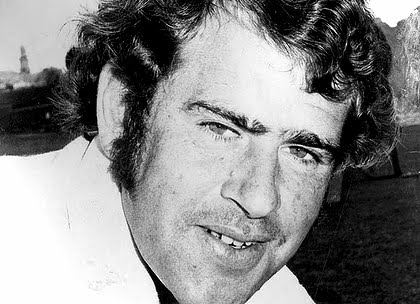 fellow with long sideburns [Terry Jenner] took up writing poetry and assumed an almost aldermanic appearance. He eventually found a sort of security in coaching, both in Australia and England, and commentating on the game for ABC Radio.
from Sidney Morning Herald: Leg-spinner had mixed innings
~~~~~~~~~~~
Poetic Obituaries: [In Uri Lifschitz'] sisters' words,
 "Uri was a very special man. He painted from the age of 8, and his whole life was painting, even though he also made sculptures and wrote poetry. At the age of 18 he went to study painting at Seminar Hakibbutzim Teachers College in Tel Aviv, but his teachers told him he didn't need to study, he already had ability for painting."
 "He described his art as a news index. Because of this, he painted Palestinians, settlers and politicians. It is impossible to define his political position, and this confused a lot of people who are used to putting things in boxes."
from Haaretz: Israeli artist Uri Lifschitz dies at age 75
~~~~~~~~~~~
Poetic Obituaries: [Linda Ann Lundgren] was a creator of
 road shows, bazaars, and programs that delighted audiences wherever she served. Shirley was a gifted artist, a published poet, a journalist, and a historical scholar.
from The Spectrum: Linda Ann Lundgren
~~~~~~~~~~~
Poetic Obituaries: Paul [Murray] was a very smart guy
 who would read anything and everything he could get his hands on. He wrote beautifully, including stories and poetry, though his handwriting was terrible.
from The Coloradoan: Paul Murray
~~~~~~~~~~~
Poetic Obituaries: [Neville] Nixon, who was a keen
motor sport fan, liked to write funny poems for his family and had a great appreciation of the countryside and its wildlife.
from Teesdale Mercury: Farewell to Man Who Touched So Many Hearts
~~~~~~~~~~~
from Teesdale Mercury: Farewell to Man Who Touched So Many Hearts
~~~~~~~~~~~
Poetic Obituaries: Marcell [Phillip Perez] enjoyed
 photography and gave many a Bride and Groom lasting memories of their special day. He worked as a photographer at Bangor Naval Base as a Civil Service Employee. He was a published poet, writing numerous poems and was a member of the Poet's Workshop.
from Kitsap Sun: Marcell Phillip Perez, 68
~~~~~~~~~~~
Poetic Obituaries: At one point in the interview,
Gil [Scott-Heron] says: "If someone comes to you and asks for help, and you can help them, you're supposed to help them. Why wouldn't you? You have been put in the position somehow to be able to help this person." That undeniable truth and his simple expression of the importance of taking care of those around you who need help and ask for help was not some empty statement. Gil lived by this creed and throughout a magnificent musical career, he helped people again and again, with his willingness and ability to articulate deep truths, through his eloquent attacks on injustices and by his enormous compassion for people's pain.
But Gil was also one of the funniest men I ever met.
from The Observer: Gil Scott-Heron, my brave and brilliant friend
then The Guardian: Gil Scott-Heron dies aged 62
then The Guardian: Gil Scott-Heron--in pictures
then MTV: Legendary Poet And Musician Gil Scott-Heron Passes Away
then BBC News: Gil Scott-Heron: US musician and poet in profile
then BBC News: US musician and poet Gil Scott-Heron dies at 62
then Telegraph: Gil Scott-Heron
then Associated Press: Gil Scott-Heron, a godfather of rap, dies in NYC
~~~~~~~~~~~
But Gil was also one of the funniest men I ever met.
from The Observer: Gil Scott-Heron, my brave and brilliant friend
then The Guardian: Gil Scott-Heron dies aged 62
then The Guardian: Gil Scott-Heron--in pictures
then MTV: Legendary Poet And Musician Gil Scott-Heron Passes Away
then BBC News: Gil Scott-Heron: US musician and poet in profile
then BBC News: US musician and poet Gil Scott-Heron dies at 62
then Telegraph: Gil Scott-Heron
then Associated Press: Gil Scott-Heron, a godfather of rap, dies in NYC
~~~~~~~~~~~
Poetic Obituaries: [Mallika Sengupta] was the Head of the Department
 of Sociology in Maharani Kasiswari College, an undergraduate college affiliated with the University of Calcutta in Kolkata, Sengupta is much better known for her literary activity. The author of more than 20 books including 14 volumes of poetry and two novels, she has been widely translated and is a frequent invitee at international literary festivals.
For twelve years in the 90s she was the poetry editor of Sananda, the largest circulated Bengali fortnightly (edited by Aparna Sen). Along with her husband, the noted poet Subodh Sarkar, she was the founder-editor of Bhashanagar, a culture magazine in Bengali.
from Washington Bangla Radio USA: Mallika Sengupta is no more!!!
~~~~~~~~~~~
Poetic Obituaries: [Marie Shoenfelt] was a homemaker
 and enjoyed writing poetry, painting and gardening.
from The Altoona Mirror: Marie Shoenfelt
~~~~~~~~~~~
Poetic Obituaries: It may be noted here that
 Professor Chandrabali Singh, a noted Hindi literary critic, was the founder general secretary of the Janvadi Lekhak Sangh, and later its president. He translated a large body of poems by Publo Neruda, Emily Dickinson, Walt Whitman and Nazim Hikmet, and in several ways brought an enormous wealth of ideas to the contemporary Hindi literature which will inspire the young of generations to come.
from People's Democracy: Comrade Chandrabali Singh
~~~~~~~~~~~
Poetic Obituaries: M.L. [Tague] held various top
 sales positions in the New England States, Florida, Texas and Iowa. He enjoyed music, sports, debating all things and writing poetry.
from The Messenger: Michael Tague
~~~~~~~~~~~
Poetic Obituaries: [Luella Nixa Tesoriero] knew volumes of
 songs from the Swing Era, and recalled poems, fairy tales and lullabies, always at the ready to entertain her younger siblings and later, future generations of family. She was a superb storyteller, keeping alive oral traditions not only of a happy childhood in Minnesota, but all the tales connected to her life's journey
from Post-Bulletin: Luella Nixa Tesoriero--Durham, N.C.
~~~~~~~~~~~
Tuesday, May 24, 2011
Subscribe to:
Posts
(
Atom
)